
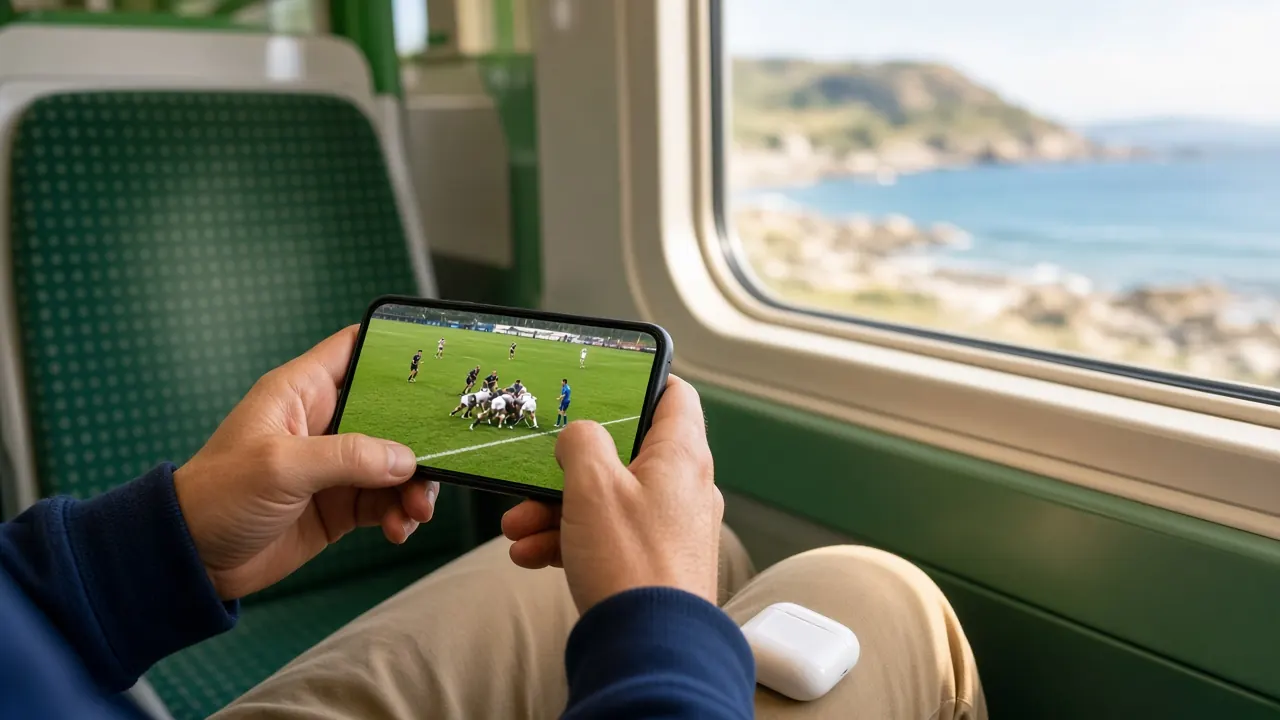
Irish expat TV is about more than channels. You can have every Irish channel on your screen and still miss the match because it started at four in the morning. This guide is about the practical side: living with the time difference, catching the moments that matter, and setting up your internet and devices so that home is one button away.
What Irish expats miss most on TV
Ask people who have moved abroad what they miss about Irish television and the answers are remarkably similar:
- Live sport. Gaelic games in the summer, rugby internationals, the football results and the big race meetings, watched live rather than as a highlights clip.
- The news. Not just headlines, but the Irish angle on Irish stories, and the weather forecast for the place you grew up.
- The shared programmes. The drama everyone at home is talking about, the Saturday night chat show, the soap your parents still watch.
- Programmes in Irish, especially for families who want children growing up abroad to hear the language.
- The big occasions. St Patrick’s Day coverage, election counts, the Christmas schedule.
Getting the channels is the easy part today. With a service such as Irish IPTV, all the major Irish national channels, Irish sport and Irish news reach you over the internet in any country. The harder part is the clock.
Irish expat TV and the time difference
Live channels play at Irish time. Wherever you live, Irish TV runs on Dublin’s clock, not yours. Once you know your offset, everything else follows.
| Where you live | Difference to Ireland | A 9 pm programme in Ireland is… |
|---|---|---|
| UK | Same time all year | 9 pm |
| Spain, France, Germany | 1 hour ahead | 10 pm |
| Dubai | 3 to 4 hours ahead | Midnight to 1 am |
| New York, Boston, Toronto | 5 hours behind | 4 pm |
| Chicago | 6 hours behind | 3 pm |
| San Francisco, Vancouver | 8 hours behind | 1 pm |
| Perth | 7 to 8 hours ahead | 4 am to 5 am the next day |
| Sydney, Melbourne | 9 to 11 hours ahead | 6 am to 8 am the next day |
| Auckland | 11 to 13 hours ahead | 8 am to 10 am the next day |
The ranges come from daylight saving time, which starts and ends on different dates in different parts of the world. For a few weeks in March, October and early November the usual gap changes by an hour, so check the big fixtures twice in those weeks.
For a city-by-city view of live sport, including a Saturday afternoon throw-in, see our page on Irish TV abroad.
Live sport at strange hours
For expats in North America, Irish sport mostly lands at good times: weekend afternoon matches become weekend mornings. In Australia and New Zealand it is the opposite, and for the Gulf and Asia big evening fixtures can run past midnight. A few habits make it manageable.
Pick your matches in advance
At the start of each month, look at the fixtures and decide which games are worth an alarm. A final, a derby or your county’s championship match probably is; a routine league game might not be.
Protect yourself from spoilers
If you plan to watch a replay or highlights later, mute the group chats from home and stay off social media until you have watched. It sounds trivial, but nothing spoils a dawn replay like a result notification at midnight.
Make the early starts easy
Set everything up the night before: the TV or tablet on charge, the channel saved as a favourite, the volume low. Start the stream five minutes before throw-in so the app has settled.
Watch together
Irish communities abroad often gather for the biggest occasions. If you host, connect the TV to the router with a network cable: a room full of people watching a final is the worst moment for Wi-Fi to falter.
On-demand viewing and catch-up
Time differences matter less for programmes you do not need to watch live. Many TV services offer catch-up, which lets you play programmes for a limited time after they were broadcast. Whether catch-up is available depends on the service and on the channel, so ask before you rely on it. Our article What is EPG and catch-up? explains how it differs from recording and from on-demand libraries.
An on-demand library is the other answer. With 93,000+ films and series included in every Irish IPTV plan, there is always something to watch that does not depend on the Irish schedule, which helps on the evenings when the live channels are showing the middle of the Irish night.
Internet abroad: what to check
The internet connection decides your viewing experience more than anything else. Before you order, and again after you move, check these points.
- Speed at your viewing time. Run a speed test in the evening, when local networks are busiest. Around 10 Mbps of stable speed is enough for one HD stream; 25 Mbps or more per screen gives the best picture on a large TV.
- Wi-Fi in rented homes. Rented flats often come with a basic router in a corner. A network cable to the TV, or a mesh Wi-Fi kit, makes a bigger difference than a faster package.
- Shared networks. In shared houses, student halls and serviced apartments, speeds drop when everyone is online. Prefer a wired connection for live sport.
- Mobile data. An evening of live TV uses several gigabytes, so check your allowance before you rely on a phone hotspot.
If the picture freezes, our guide to IPTV buffering walks through the causes in order.
Devices that travel well
The most practical setup for expats is a small streaming stick or TV box for the main TV, plus a player app on your phone or tablet. The stick fits in a pocket and works on any TV with an HDMI port, including the one in a holiday rental. The phone app keeps you connected on the move. Our guide on how to set up IPTV covers both.
If you move country, nothing changes: the same login works in the new place as soon as you are online.
Paying and getting help from abroad
Irish IPTV keeps one price list in pounds for everyone. If your account is in euros, dollars or another currency, your bank converts the payment. Plans start at £15 for 1 month, and the 12-month plan works out at £5.75/month.
Ordering and support both run on WhatsApp, which works in nearly every country with no international call charges. Support is available around the clock, so it does not matter that your evening is Ireland’s early morning.
An expat setup checklist
- Work out your time difference to Ireland and note the times of the programmes you care about.
- Test your internet speed in the evening.
- Decide which device you will use on the main TV, and connect it with a cable if possible.
- Write down your five must-have Irish channels and confirm them with the provider.
- Start with a short plan and test it during a big live event.
- Save your favourite channels and set up the player on your phone too.
- Check the fixtures each month and pick the matches worth an alarm.
Ready to bring Irish TV to your new home? Compare the plans on our Irish IPTV prices page, or message us first with any question about watching from your country.
Ask about watching from abroad (opens WhatsApp)
Published on 2 November 2026.